What the buyer sees
A buyer never has to know the program exists to benefit from it. This article walks the path a buyer actually takes, so your team can answer “where is my credit?” without looking anything up.
At the till or the checkout
Section titled “At the till or the checkout”Nothing changes about the sale. The receipt carries one sentence your team approved when the program was set up, in the shape of:
Your Bonus Credit arrives by email within 48 hours of purchase. No email at purchase? Claim it at the program’s claim page.
The 48 hours is deliberate. The credit is held for a waiting period after the sale, so a card bought at the desk cannot be spent on the spot and refunded on the way out.
The credit email
Section titled “The credit email”When the waiting period ends and the sale still stands, the buyer receives your booking platform’s own gift voucher email, from your booking platform’s sender and in your branding, with the credit code inside and the program’s terms beneath it. The code is a separate voucher in your booking platform; the gift card they bought is not touched and never expires on their account.
The email goes to the address on the sale: the one the buyer typed at your online checkout, or the one your card terminal captured at the desk. If the sale carried no email, nothing is sent and the credit waits for a claim.
The claim page
Section titled “The claim page”The claim page lives on your own address. A buyer enters the number printed on the gift card and an email address.
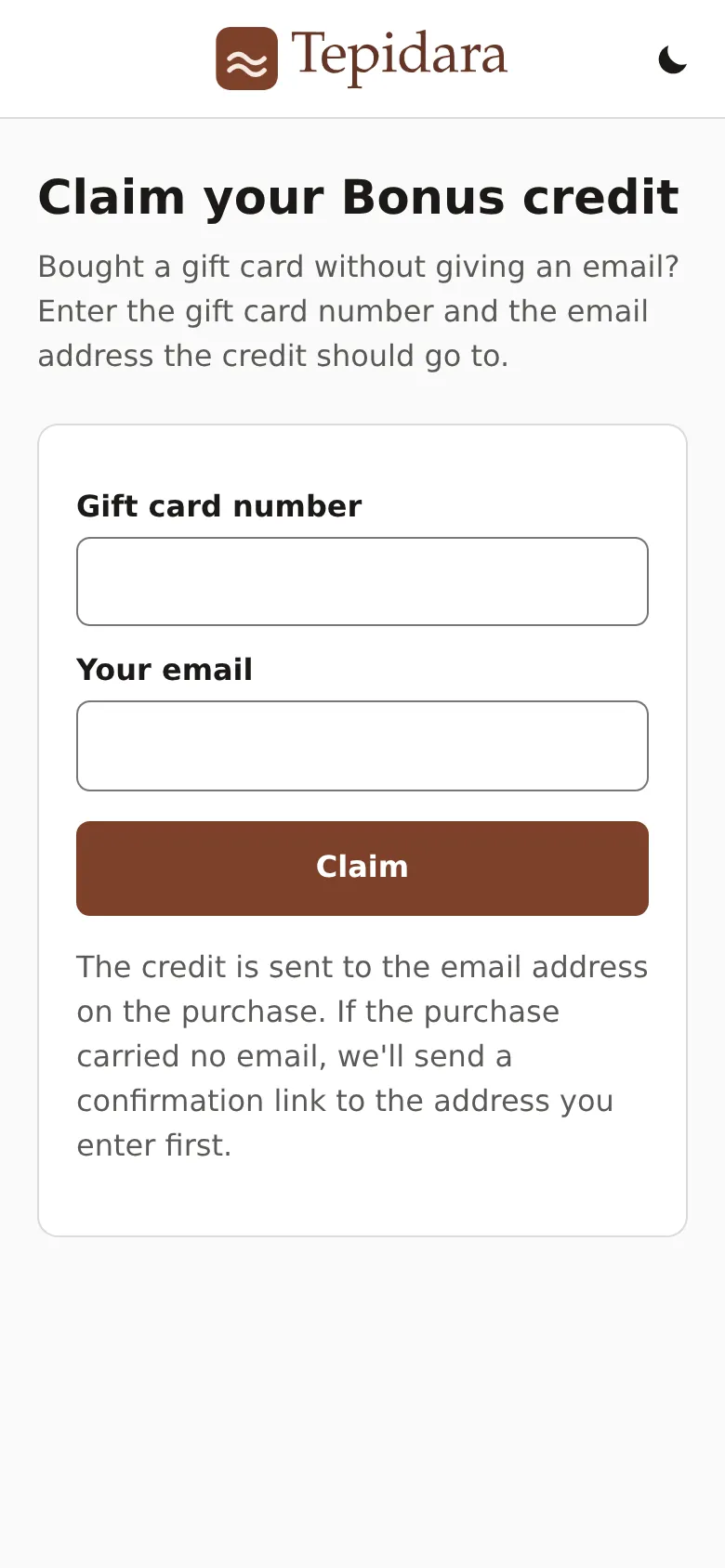
Whatever happens next, the page shows the same single sentence: if the purchase qualifies, the credit is emailed to the purchaser within the promised time. It never says whether the card was found, whether it has already been claimed, or who bought it, because a page that answered those questions would let anyone with a photograph of a card number learn things about its owner.
Behind the sentence, one of three things happens:
- The sale carried an email. The credit goes to that address, whatever was typed on the page. A gifted card cannot redirect the bonus to the recipient; it belongs to the purchaser.
- The sale carried no email. The typed address receives a short confirmation email with a single-use link. Nothing is addressed until the link is opened. The first address to confirm gets the credit; a later claim on the same card sees the same sentence and nothing more.
- The card is not part of the program, or was bought outside the campaign dates, or the purchase was refunded. The same sentence, and no email.
The confirmation email is plain: it names your venue as the party it is sent for, carries your mailing address in the footer, and contains no offer and no code. It is sent from the platform’s address with your venue’s name as the sender name.
Spending the credit
Section titled “Spending the credit”The code is entered at checkout in your booking platform like any other voucher. It can be used across more than one visit until its balance is spent. The program’s terms say what it can buy; your booking platform does not enforce that at the till, so a credit spent on something outside the offer is flagged to your team afterwards rather than refused. See Refunds, chargebacks and the bonus for what your team does then.
Every code carries an expiry date, printed in the email. Unused balance stays on the code until that date.
Timing your team can promise
Section titled “Timing your team can promise”| Moment | What has happened |
|---|---|
| Purchase | The sale is recorded; the credit is scheduled for after the waiting period. |
| Waiting period (24 hours) | Nothing is sent. A refund or chargeback in this window means no credit is issued. |
| Credit issued | The code exists in your booking platform and the email is sent. |
| Within the promised window (48 hours) | The public promise on the receipt and the claim page; it covers the waiting period, the daily sweep and the send. |
| Claim with no email on the sale | A confirmation email at once; the credit follows the confirmation within the promised window. |
Something wrong or unclear on this page? Tell us and we’ll fix it.